Thursday, April 22, 2021

Research in Mission Beach CA!

 Hey All-

Hope your research is going well! This past week I spent a few days in San Diego and it was amazing! The weather was great and I'm so glad I went! While I was there, I went to the beach a few times; once to Mission Beach and once to a beach in Encinitas. The beach in Encinitas didn't have any visible trash. I saw a woman with a bag and trash grabber that was there with her work for Earth Day. She said she found a small amount of trash and it was mostly plastic. Good news! The time I spent at Mission Beach was a different story. There was a lot of trash left behind by beach goers. Mostly plastics but several masks (which are made of plastic) as well as paper and styrofoam food containers.

This research has really began to open my eyes to the amount of trash that gets left around but also the amount of plastics we produce and waste per year. I've been working on properly recycling products that are recyclable and reusing products that I'm able to. 

The photo below was taken at Mission Beach. The mask looks to be caught in the seaweed so I'm not sure if it washed on shore or if it happened to get caught on its journey toward the ocean.


Thursday, April 15, 2021

One Time Use Plastic-Research in UK

 Hey All-


Hope everyone's week is going well! This week has felt super busy but I'm heading to San Diego for an extended weekend so I'm excited to get out of town for a few days. I'm also excited to take my research with me to the ocean. I plan on going to the beach and selecting an area to collect trash and document my findings. My guess is that it will be mostly one time use plastics. In my research so far, most of the trash collected has been plastics. 

I found an article written about plastic pollution in freshwater rivers in the UK. The article references the types of plastic pollution found : "These top ten plastic items represented 42% of all litter identified in freshwater environments: five plastic items were food related (food wrappers, straws/stirrers/cutlery, bottles and lids, takeaway containers, and cups), two were sanitary/cosmetic (cotton bud sticks and sanitary towels), and two were smoking related (cigarette butts and smoking-related packaging); the other item type was plastic bags." (Marazzi, Loiselle, Anderson, Rocliffe, & Winton). This information is helpful in getting an idea of what others are finding during their research. 


Source: Marazzi, L., Loiselle, S., Anderson, L., Rocliffe, S., & Winton, D. (n.d.). Consumer-based actions to reduce plastic pollution in rivers: A multi-criteria decision analysis approach. Retrieved April 16, 2021, from https://journals.plos.org/plosone/article?id=10.1371%2Fjournal.pone.0236410


Thursday, April 8, 2021

Project Background

 Hey All-

I'm posting my Project Background this week since I had some in field work that I did last week. I've updated my research question to be more focused on the types of waste present in waterways. Since a majority of trash in the ocean originates on land, I wanted to get an idea of the types of trash making its way into our oceans. I want to continue to explore this project beyond this semester and expand upon the findings each term.

Research Question: What are the primary types of waste in waterways?

Hypothesis: If we can identify the waste present, we can identify the source.

I believe the majority of waste that will be found at site visits will be one time use plastics. Other items may include Styrofoam, aluminum and paper.

What is currently known and why its important to expand on this knowledge:

“Due to their very slow degradation periods, plastics have become ubiquitous and have been associated with marine health impacts7 such as entanglement9, ingestion , the potential dispersal of invasive species and toxicity, and contamination through trophic levels.” (Ostle et al., 2019). A main concern in dealing with plastics is the effect they have on the environment. Plastics break down through Ultraviolet light into smaller and smaller pieces. These pieces can be ingested by marine life and cause damage to the ecosystem.

“A vast majority of marine plastic pollution derives from land-based sources (4.8–12.7 million metric tonnes of plastic annually)3, so a sole focus on marine oriented solutions is insufficient. The sources of such plastics are equally diverse, from commercial and recreational ships and vessels, fishing and aquaculture operations (rope, waste, fishing gear, nets) to land based sources, street litter, dumping, packaging (including plastic bags), plastic sheeting and production waste” (Haward, 2018). So far we are able to tell that a majority of trash is from land-based sources. As evidenced through the research I have been conducting, many pieces of trash found in the Tres Rios is one time use plastics. Plastics ranging from water bottles to food containers were found in and around the river. During my time at the confluence, I observed several different birds in the shallow water, picking at the greenery. I noticed several people with fishing rods that had been fishing in the river. I cannot help but recognize the damage these plastics have on the ecosystem that have the potential to affect both wildlife and humans.

“Community action can include initiatives that reduce the amount of plastic entering the marine environment, a focus on recycling and reusing plastics, and continue to improve public awareness of the impacts and vectors of marine plastic pollution, as well as practical mechanisms such as litter traps” (Haward, 2018). Expanding current knowledge on the dangers of plastics in waterways will help us have a positive impact on the environment. Continuing to educate the public on how to recycle, where to recycle and opportunities to reduce our waste footprint will benefit generations to come. The more we discuss the problem and form potential solutions, the higher the chances of saving wildlife and ecosystems.


Sources:

Ritchie, H., & Roser, M. (2018, September 01). Plastic pollution. Retrieved April 09, 2021, from https://ourworldindata.org/plastic-pollution

Ostle, C., Thompson, R., Broughton, D., Gregory, L., Wootton, M., & Johns, D. (2019, April 16). The rise in ocean plastics evidenced from a 60-year time series. Retrieved April 02, 2021, from https://www.ncbi.nlm.nih.gov/pmc/articles/PMC6467903/

Haward, M. (2018, February 14). Plastic pollution of the world's seas and oceans as a contemporary challenge in ocean governance. Retrieved April 02, 2021, from https://www.ncbi.nlm.nih.gov/pmc/articles/PMC5812987/


Tuesday, March 30, 2021

Week of March 22nd

 Hello Everyone!

Last week I ventured over to Tres Rios to do some research and exploring. What a great area! The Tres Rios is where the Salt River, Gila River and Agua Fria River join together. It's a pretty large area and is right near the Phoenix Raceway in Avondale. I choose an area on the river bank that looked like it might collect trash as the rivers meet. 

I choose a 20ftx20ft area to collect trash. It took me about an hour to collect trash from the water and near the water. During my pick up I collected:

16 Plastic Bottles (whole/partial pieces)

6 Aluminum Cans

6 Glass Bottles

1 Bunch of wire/fishing line

16 Pieces of styrofoam

1 Latex Glove

5 Paper Products

26 Miscellaneous plastic

I'm mostly looking for one time use plastics. I'm still collecting the other data for now to ensure I have a good idea of the types of trash. Its safe to assume some of the trash was left behind by people and that not all of it came from the river. (Side note: I expected more masks/gloves given the pandemic but only found one latex glove)


Thursday, March 11, 2021

First site visit! Week of 3/7/21

Hope everyone's week has been well! I am excited for Spring Break as it will give me a chance to go to a few locations to survey the types of trash present. This week I went to the canal off of 7th avenue and Campbell avenue to survey the types of trash in the canal. 

9 water bottles
1 cigarrette pack
2 shoes
1 backpack
1 Clorox bleach bottle
2 grocery bag
1 chip bag
9 styrofoam pieces
1 paper cup
6 aluminum cans
1 steel can
3 glass bottles
3 plastic containers

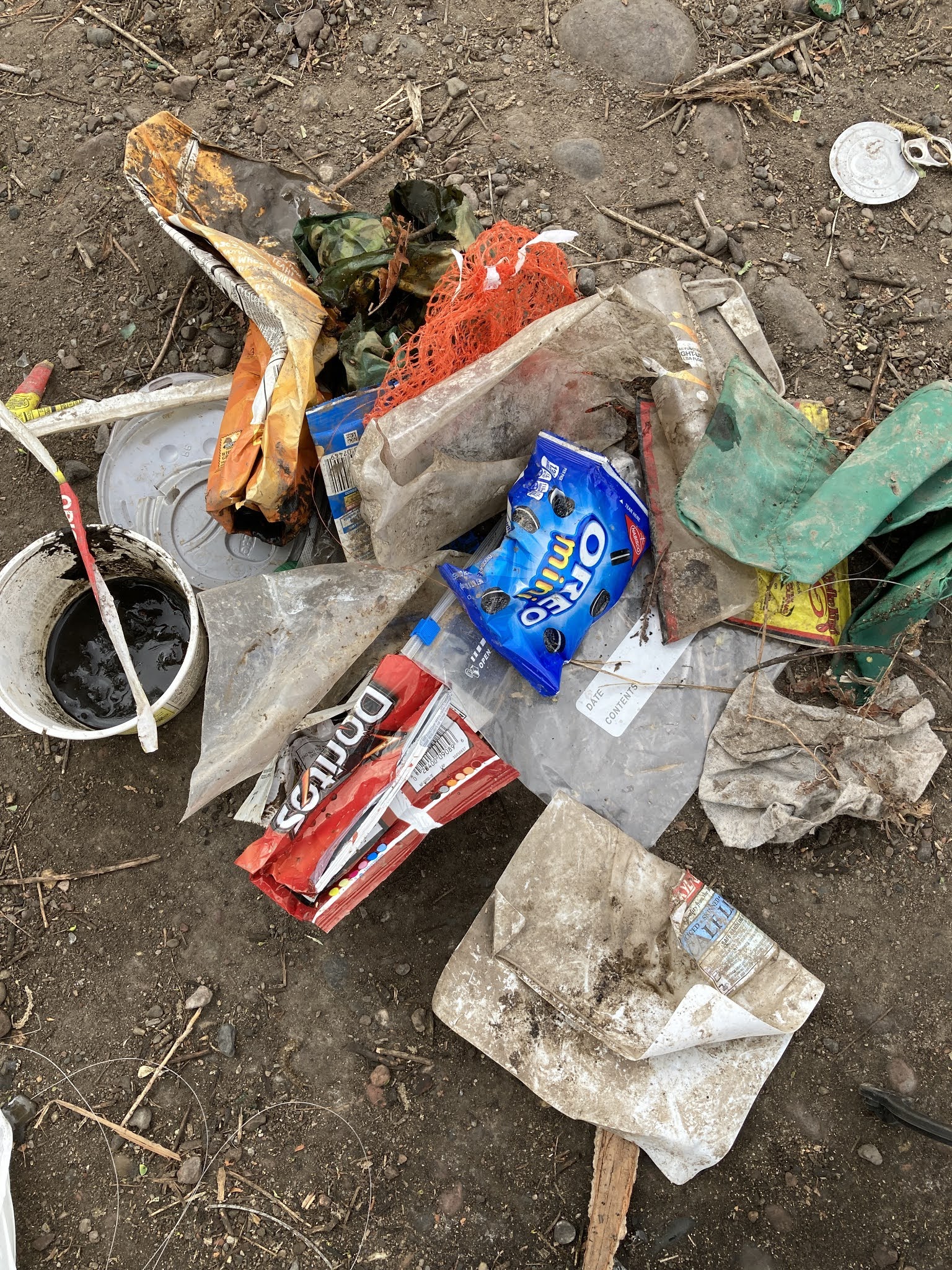
My hypothesis needs to be adjusted to reflect the physical data gathering. I'm hypothesizing that one time use plastics will be the primary source of waste present in waterways. Based off my initial data gathering, it appears that hypothesis will be correct. I will be returning to the same site bi-weekly. Below is a sample of one-time use plastics.


Thursday, March 4, 2021

Research Proposal-Waste in our Local Waterways

Waste in our Local Waterways

I decided to select this topic based on the amount of trash and pollution I have been seeing within Phoenix. I’d like my research to start locally and eventually lead to how it ends up in the ocean, specifically the great pacific garbage patch. Currently, there is no solution in regards to the clean up of debris/waste within our oceans. We’ve only begun discovering the amount of waste present.

I believe this topic is significant as waste and pollution have a significant impact within the ecosystem. Plants and wildlife are being affected. Animals eat the toxins from waste and perish from it or continue to pass the chemicals up the food chain until eventually, it reaches humans. Studying waste in our environment could lead to the implementation of different, less harmful products and save the lives of animals living in those environments. The research conducted could provide insight into what is being discarded, if those materials can be recycled and the potential to find ways to reduce our waste impact.

In order to measure the data from my research question, I plan to choose several sites within Phoenix, visit them on a weekly/biweekly basis and determine the types of waste present at the location. Each visit, I will collect the waste and dispose of it properly and again measure what waste is present. This will provide insight into how much waste accumulates in that area within a specific time period. I plan to document the data and begin building a spreadsheet with the types of waste present.

Name

I/D/C

Units

Description

Site Visit Frequency (Time)

Independent

Variable

Weeks

The amount of visits done

Number of pieces of Waste

Dependent

Variable

1 piece=1 unit

Number of pieces at each site visit

Location

Controlled

-

Sites at which research is conducted


Research Question: What are the primary sources of waste that reach local waterways?

Hypothesis: If we can determine the type of waste present at several sites throughout the city, then we can look at preventing further damage to local ecosystems.

I believe the majority of waste that will be found at site visits will be one time use plastics. Other items may include Styrofoam, aluminum and paper.

*Photo taken from https://www.britannica.com/science/plastic-pollution


Thursday, February 25, 2021

Plastic Waste Within our Waterways

 Hey Everyone!

Hope your spring 2021 semester is going well! I met with Matt today and we discussed the possibility of looking at the types of waste that enter our oceans and local ecosystems. I watched an interview with Dr. Phil Landrigan and it had me thinking about the impact pollution has on our ecosystem in Phoenix. I wondered how much waste was accumulating in the canals, ponds, rivers and lakes that our wildlife live in. 

My plan is to find several waterways within the city that I can visit on a regular basis, and identify the type of waste present. I will track the type of waste, collect and properly dispose it, and return to the same place (at an unspecified amount of time) to see how much refuse has accumulated since the last visit. 

A few random facts:

-150 million tons of plastic currently in our oceans

-10-12 million tons of plastic waste enters the oceans each year

-More than 80% arises from land based sources


Thursday, February 18, 2021

Research-Great Pacific Garbage Patch

I've been doing some research on the Great Pacific Garbage Patch and its effects on the ecosystem. The first thing that stood out to me was:

"There are five major gyres: two in the Atlantic Ocean, two in the Pacific Ocean, and two in the Indian Ocean. Gyres act a bit like whirlpools, pulling objects from their edges to their centers. This causes anything in the water to accumulate. All five ocean gyres have garbage patches in them." (Blackwell)

I was surprised to learn that there isn't one garbage patch, there are multiple. The largest of the garbage patches is located in the Pacific ocean, off the coast of California. "The patch contains about 79,000 metric tons of plastic trash, with perhaps 1.8 trillion individual pieces." (Blackwell). I would like to delve deeper into how this amount of trash affects the local ecosystem. As I read through articles and begin to think about my research question, I'm thinking about how this same issue affects the local ecosystems within Phoenix. What issues have come from birds and/or plants that have been exposed to trash and debris in the canal.

Here is an idea of the size of the Garbage Patch in the Pacific:


Blackwell, Amy Hackney. "Pacific Gyre Garbage Patch." Gale Environmental Studies Online Collection, Gale, 2018. Gale In Context: Environmental Studies, link.gale.com/apps/doc/CXRNIL252565088/GRNR?u=mcc_main&sid=GRNR&xid=22fb776d. Accessed 19 Feb. 2021.

Thursday, February 11, 2021

Spring 2021 Semester

 Hello All-


Hope you all had a great winter break. It didn't feel like long enough! While on break I did a lot of hiking, eating and relaxing. I hiked Devil's Bridge in Sedona over the break and loved it. Sedona has such amazing hiking trails! (Attached is a photo from Devil's Bridge)

This semester, I am wanting to change gears a bit and focus on something environmental. A few ideas I discussed with Matt and Josh were contamination in urban ponds and the damage the great pacific garbage patch has on the local ecosystem. I'm hoping to gather some additional information and begin thinking of a research question to address the impact on the ecosystem. 

Excited to be back and looking forward to working with you all again!


Wednesday, December 9, 2020

Final Research Paper-Ending the Semester

This semester feels like it has really tested my ability to find balance. This was my first full time semester at Phoenix College and it was a bit of a challenge between work and school. Calculus proved to be one of the more difficult classes I've taken and required a lot studying time and zoom meetings with other students. I’ve really enjoyed working on my research paper this semester. My writing skills feel a bit rusty and I often found myself getting stuck researching things that didn’t pertain to my research but overall I had a great experience. I wish everyone luck with their research paper!

Side Note: I think I received each of these medals this semester. Especially the caffeine.


Thursday, December 3, 2020

Smallpox eradication and Variolation

 Hello All,

Its hard to believe I am almost finished writing my first research paper. I still have a few edits to make and some details to add but overall, I'm excited to finish it. 

This week I've been looking into the history of vaccine development and the timeframe it has taken to approve the usage of said vaccine. For instance, the smallpox vaccine was developed in the late 1940's and the disease was declared eradicated by the World Health Organization in the late 1970's (Smith, 2013). This is such an amazing accomplishment and a testament to the power of vaccines. Modern technology has given scientists the ability to quickly share genome sequences of viruses which has shortened the research time for vaccine development. 

Side note: I also discovered the initial way to inoculate individuals was through variolation, which was the process of introducing a mild version of a virus to a healthy individual. People would tie rags to an infected individual then tie the same rag to a healthy individual to give them a mild version of the virus. In some instances, scabs from a virus would be crushed up and inserted into the nose (as seen in the image). Fascinating stuff right??


Smith, K. (2013, May). Smallpox: Can we still learn from the journey to eradication? Retrieved December 04, 2020, from https://www.ncbi.nlm.nih.gov/pmc/articles/PMC3734679/


Connecting with a Mentor/Ncuire

 Hello All- What a busy/productive semester this has been! I think this is probably the most studying I've had to do for any of my class...